
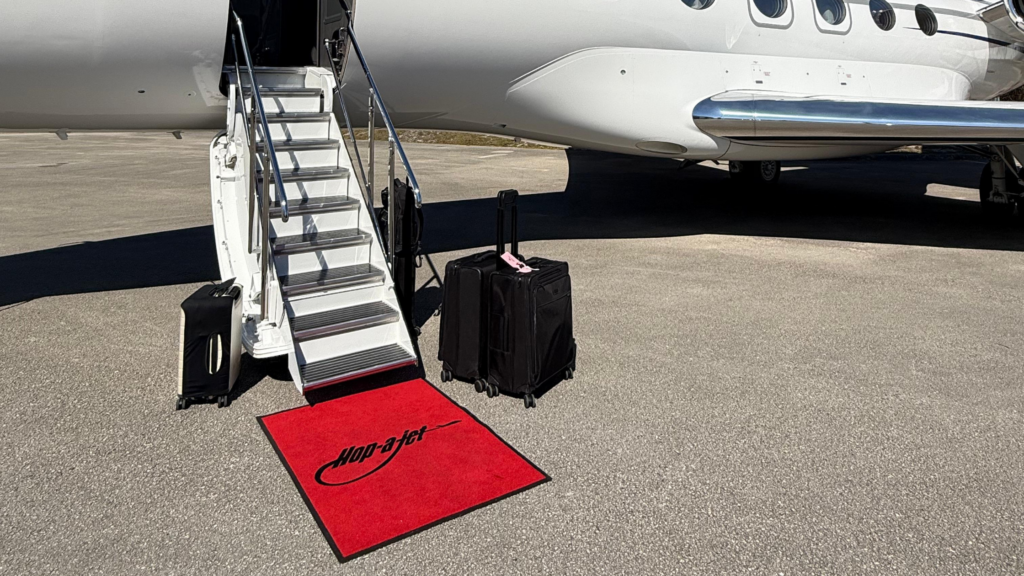
A Transparent Breakdown of Private Jet Charter Pricing, Hidden Fees, and How Payment Really Works
If you’ve ever Googled “how much does it cost to charter a private jet,” you already know how inconsistent the answers can be. One site gives you a range, and another gives you a different one; yet, very few explain where the cost of your quotes actually comes from.
Let’s cut through that.
In this guide, we’ll walk through what really drives private jet pricing: realistic brackets by aircraft type, route examples, the fees people overlook, and how payment works once you move from quote to confirmation. By the end of this article, you should have a clear framework before you request a quote.
In practice, most private jet charter costs are driven by three core factors: the aircraft you choose, the distance you fly, and how the trip is structured.
How Much Does It Cost to Charter a Private Jet? Understanding the Real Drivers of Charter Pricing
If you’re new to private aviation, it’s easy to assume the cost of the flight is simply the aircraft and the flight time. In reality, charter pricing reflects the operational structure of the trip as well.
In fact, the National Business Aviation Association (NBAA) notes that charter pricing can include additional cost components beyond flight time, including fuel surcharges, one-way fees, crew expenses, landing and handling fees, and other operational charges.
So instead of focusing solely on an hourly rate, ask for the total trip cost, all-in, along with the assumptions used to build it.
…and if you’re wondering what “all-in” actually includes, here’s how most charter trips are structured:
- Aircraft cost (often built off billable flight time)
- Trip structure costs (one-way vs round trip, repositioning)
- Airport-related fees (handling, landing, overnight parking)
- Crew-related costs (overnights, duty limitations, transportation)
- Extras (catering, ground transport, Wi-Fi on some aircraft)
That is how a charter trip is typically assembled. The variables below explain how each piece affects the final number.
How Aircraft Type Affects Private Jet Charter Cost
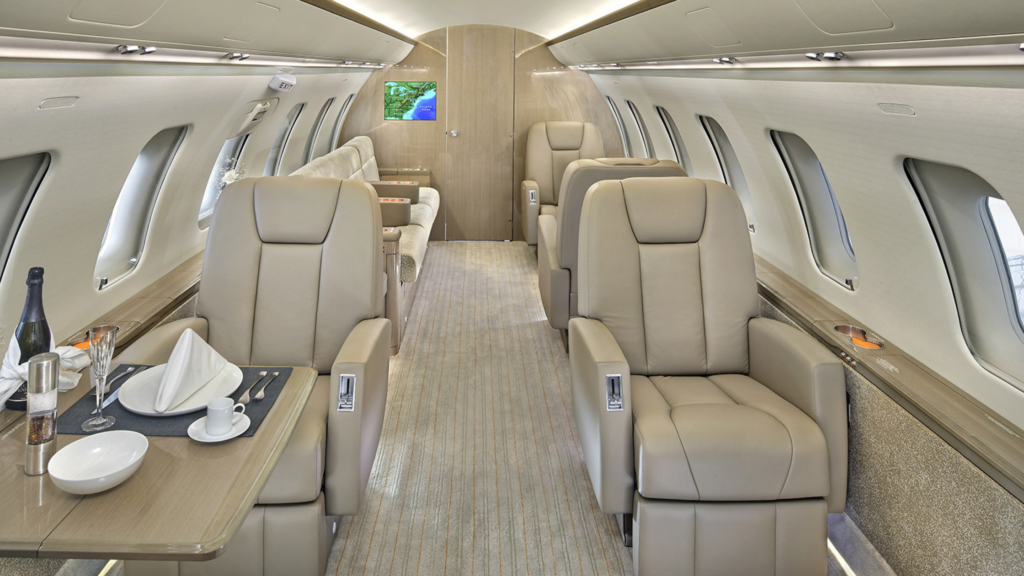
Aircraft category is one of the primary factors behind charter pricing, because aircraft size, range capability, and operating costs all influence how a trip is structured. However, if you’d like to compare aircraft categories in more detail, you can view our current private jet fleet to see how size, range, and cabin layout influence pricing.
Very light jets and turboprops
These are the “efficient commuters” of private aviation and great for shorter hops. You’ll often see them start in the low thousands per hour and move up from there depending on the aircraft and mission. If you’re trying to keep the budget down, this category is usually where the conversation starts, though availability can still tighten on popular dates.
Light jets
Light jets are a common sweet spot. They offer enough speed and comfort for regional missions and are typically priced in the low to mid-thousands per hour, depending on the aircraft, market, and routing.
Midsize
Generally in the mid to upper thousands per hour, with more consistent and predictable pricing. These aircraft are commonly used for mid-range trips and tend to have more stable charter rates compared to smaller jet categories.
Super midsize
More cabin. More range. Usually more cost per hour, due to their mission versatility.
You’ll see many market guides place midsize jets above light jets, with super midsize aircraft typically pushing higher depending on demand, routing, and the exact model.
Heavy and ultra-long-range
This is where the numbers can climb quickly. Heavy and ultra-long-range aircraft sit at the top of the pricing range because they bring more cabin space, more range, and more operating complexity. Exact pricing can vary widely depending on the aircraft, demand, and mission profile, which is why broad ranges are usually more useful than a single quoted number.
Real Route Examples That People Actually Search
Route examples help illustrate how distance, aircraft capability, and trip design influence private jet charter cost in the real world. Looking at a few common city pairs also gives you a practical sense of flight time, routing considerations, and why two quotes for similar trips can still vary.
Miami to New York
Distance matters because it drives flight time and fuel. A straight-line Miami to New York distance is about 1,090 miles, or roughly 950 nautical miles, based on publicly available distance calculations. Actual flight time depends on aircraft type, routing, winds, and air traffic control, but 2.5 to 3.5 hours is a reasonable planning range for many business jets on this city pair.
Fort Lauderdale to Aspen
This one swings a lot based on season and aircraft choice. Aspen also brings airport-specific considerations that can influence which aircraft makes sense and how the operator prices the trip. If you’re flying peak winter weekends, availability can be the deciding factor.
Las Vegas to Miami
This is a transcontinental route at just under 2,200 nautical miles, which typically requires a midsize jet or larger depending on passenger count and winds. Flight time usually falls in the 4.5 to 5.5 hour range for most business jets.
Because of the distance, aircraft capability plays a major role in pricing. Not every light jet can make this trip nonstop, so comparing quotes only makes sense if you’re looking at similar categories of aircraft.
Palm Beach to the Bahamas
Although this is a short flight time, don’t assume this charter will be “cheap.” The rate doesn’t drop just because the flight is short. Minimums, airport handling, and customs logistics can matter on international hops.
New York to Los Angeles
On this route, range becomes the deciding factor, because the aircraft category can influence pricing just as much as the distance itself, and in some cases even more.
One tip: if you want a quote you can trust, be clear about passenger count, baggage, and your flexibility on departure times. That flexibility can open up better aircraft positioning and sometimes better economics.
What Affects Private Jet Charter Pricing?
This is the part where many explanations get vague, but the drivers behind charter pricing are actually straightforward once you see how they connect.
Aircraft size and range
Larger aircraft are more expensive to operate, and aircraft designed to fly longer distances typically burn more fuel and require more maintenance and crew resources. Those operating costs flow directly into the charter rate, which is why moving from a light jet to a heavy jet can shift pricing quickly.
Flight time and billable hours
Charter pricing is usually based on billable flight time rather than simply “wheels up to wheels down.” Operators often apply minimum flight times per day, and certain trip structures can create additional billable segments, especially if repositioning is required before or after your flight.
One-way vs round trip
One-way itineraries can introduce additional cost considerations because the aircraft may need to reposition before your flight or after drop-off. These repositioning segments are often reflected in the final quote, which is why two similar one-way trips may be priced differently.
Fuel and market conditions
Fuel costs fluctuate, and so does demand. A quote during a slow travel week can look very different from one issued around a major event, holiday, or peak season. Availability plays a role as well, especially when specific aircraft categories are in high demand.
Landing, handling, and airport fees
Airport-related charges vary by location and by FBO. At high-traffic airports or specialty destinations, those fees can be meaningful enough to noticeably affect the total trip cost.
Crew expenses and duty limits
Crew scheduling is governed by federal regulations. The Federal Aviation Administration establishes flight and duty time limitations for commercial operators, which directly influence how charter trips are scheduled and staffed. When a crew needs to remain with the aircraft or reposition separately, those transportation and lodging costs are typically reflected in the final quote.
Repositioning (deadhead) costs
Repositioning, often called a “deadhead segment,” occurs when an aircraft must fly empty to reach its departure airport or return to its base after its trip. That additional flight time is typically included in the total charter cost, which is why quotes for the same route can vary depending on where the aircraft is located.
Additional Costs That Can Affect a Charter Quote
Charter pricing is often presented as a single all-in number, but several operational factors can still influence the final cost depending on the trip, airport, or timing.
A few of the most common variables include:
- Fuel surcharges in some quoting structures
- Landing and handling fees
- Crew overnight and per diem
- Wait time or “standby” charges in certain trip designs
- Special event fees around major conventions, sporting events, or peak travel periods
- Hangar costs or deicing charges when weather or airport conditions require them
Some trips bring additional costs like catering, ground transport, airport-specific handling, special event fees, or weather-related items such as hangar use and deicing. If a quote looks low, it may be because those variables are not obvious in the headline number.
One-Way vs Round Trip Charter, and Where Empty Legs Fit
Anyone researching private aviation will quickly hear terms like round trips and empty legs mentioned as potential ways to reduce cost. Although both can influence pricing, the details matter more than the headline. So, believe it or not, sometimes a round trip can reduce overall cost because the aircraft remains with you and returns on your schedule. With a one-way itinerary, additional positioning may be required, which can affect total pricing.
That benefit usually applies when the aircraft stays with you for a short window. If the gap between flights stretches beyond a few days, operators will often reposition the aircraft for other trips rather than keep it idle, which can remove the cost advantage of a round-trip structure.
Empty legs can offer savings when your schedule happens to align with an aircraft that already needs to reposition. Many consumer guides reference potential discounts in these situations, but those opportunities depend entirely on timing and availability.
It’s important to approach them with realistic expectations. Empty legs are schedule-dependent and cannot be treated as a guaranteed discount strategy.
How Do You Pay for a Private Jet Charter?
This part of the process matters more than most people admit. In too much of the industry, the checkout flow still feels like: sign a PDF, send card details, then wire money, then follow up again. That frustration reflects what many operators describe as the outdated “PDF-credit card-wire” workflow that still exists in parts of private aviation.
It’s outdated, but it’s still more common than most clients expect. Newer checkout platforms are beginning to modernize this process with secure digital contracts, encrypted payment portals, and cleaner payment workflows. Platforms like Tuvoli are part of that shift, and we’ll look at how these systems work in more detail in a companion article focused on private jet charter payment and checkout technology.
Traditional payment methods you’ll run into
You’ll see bank wires, ACH transfers, and credit card payments. Credit cards are common for convenience, but most operators apply standard processing fees that typically fall between 3% and 5% of the total charter cost.
NBAA’s consumer guide focuses more on understanding what’s included and doing due diligence, but it’s clear that a charter transaction can involve multiple cost components, which is one reason payment processes can get clunky when they’re handled manually.
Can you pay for a private jet with a credit card?
Often, yes. Sometimes partially. Sometimes fully. It depends on the operator’s processing setup and the size of the transaction. Many consumer-facing charter resources explicitly describe credit cards and bank transfers as standard payment options.
The practical reality is that high-dollar card transactions may require a capable merchant account and fraud controls. Many clients choose wire or ACH instead because those methods typically avoid the 3%–5% credit card processing fees. In some cases a credit card authorization may still be placed at contract signing and then released once payment is received by wire or ACH.
A quick word on wire security...
Wire transfers are common in private aviation, especially for larger transactions. They are also a frequent target for fraud across many industries.
Wire fraud typically involves someone intercepting or spoofing payment instructions, often through email, and sending altered banking details that redirect funds to the wrong account. Because wire transfers are difficult to reverse once completed, confirming instructions before sending funds is critical.
When wiring money for a charter, always verify payment details through a trusted, pre-established contact method. Do not rely solely on emailed instructions; a quick phone call to a confirmed number can prevent a costly mistake.
How technology is modernizing private jet checkout
While parts of the industry still rely on manual processes, booking and payment technology has improved significantly in recent years. Modern systems now use secure digital contracts, encrypted payment portals, and clear line-item breakdowns so the quote and the checkout experience actually align.
That matters because once you decide to move forward, the process should feel straightforward and secure, not fragmented or confusing.
At Hop-A-Jet, the approach is simple: pricing transparency should extend beyond the initial quote. The payment and documentation experience should reflect the same level of professionalism as the aircraft itself.
Are Private Jet Prices Negotiable?
The honest answer is that it depends on market conditions and trip structure.
Charter pricing is driven by supply and demand. When aircraft availability is tight, especially around holidays, major events, or peak seasonal destinations, there is often very little flexibility in the quoted rate. In those cases, the market sets the number.
On the other hand, if you have flexibility with departure times, are open to different aircraft categories, or can adjust routing slightly, there may be opportunities to improve the economics of the trip.
In private aviation, negotiation is rarely about pushing the rate down arbitrarily. It is more often about structuring the itinerary in a way that reduces repositioning, aligns with existing aircraft schedules, or opens access to more efficient options.
The smarter move is not negotiating harder. It is designing the trip intelligently.
Is Chartering a Private Jet Worth the Cost?
Charter makes sense when time and control truly matter.
While commercial routing requires connections, fixed departure windows, or unnecessary overnights, private aviation allows you to depart when you choose and fly direct. If you need to visit multiple cities in one day, it becomes operationally possible without being tied to airline schedules.
Comfort plays a role as well. You move through a private terminal, board within minutes, fly nonstop, and sit in a quiet cabin where you can work or relax without interruption. The experience is calm, predictable, and structured around your schedule rather than an airline timetable.
That said, charter is not the right solution for every scenario. If your schedule is flexible, your destination is well served by nonstop commercial service, and your primary objective is minimizing cost, a commercial ticket may be the more practical choice. In those situations, the price difference can be difficult to justify.
Private aviation becomes rational when time savings, privacy, flexibility, or operational efficiency carry meaningful weight. When those factors are not priorities, the premium can feel unnecessary.
How to Get the Most Accurate Quote Quickly
If you’ve been researching how much does it cost to charter a private jet and you’re ready for precise numbers, here’s how to get pricing that’s actually useful without a bunch of back-and-forth:
- Start with your exact city pair or preferred airports. Not just “South Florida to New York.” The specific departure and arrival airports affect landing fees, handling costs, and aircraft availability, so real numbers can come if you know exactly where you’re leaving from and going to.
- Provide a clear departure or arrival time requirement whenever possible. Flexibility can help expand aircraft availability, but it should be treated as a secondary advantage rather than the starting assumption. If you can offer a one- or two-hour window around your preferred time, it may open additional aircraft options and sometimes improve positioning efficiency. Even a one- or two-hour range can meaningfully expand aircraft availability, improve positioning options, and sometimes reduce overall cost. When operators have room to work within a window, they can align your trip with existing aircraft schedules instead of forcing a less efficient repositioning.
- Be precise about passenger count and expected luggage. Aircraft category is one of the primary cost drivers, and baggage volume can materially affect which aircraft is both appropriate and efficient for the trip. A jet that works for four passengers with light bags may not be suitable for six passengers with larger luggage.
- Clarify whether the trip is one-way or round trip from the outset. That detail directly influences whether repositioning segments are required, which can significantly affect the total cost.
- Include any operational considerations that may affect the flight. This includes traveling with pets, specific catering expectations, international segments, or unique ground handling requirements. These factors can influence both aircraft selection and the structure of the final quote.
When you provide that level of clarity upfront, the quote you receive is much more likely to reflect the actual trip rather than a generic estimate.
Transparent Pricing. Straight Answers.
By now, you can see that private jet pricing isn’t random. It follows structure. Aircraft, routing, timing, and availability all influence the final number, and once you understand those variables, a quote becomes something you can evaluate instead of something you have to guess at.
A charter experience should reflect that same clarity from the first conversation through final confirmation, and that’s the standard we apply at Hop-A-Jet. You should understand what is included, how the trip has been designed, and what variables may still affect the final total.
Travelers planning a trip who want pricing built around their exact itinerary can request a personalized private jet charter quote. Our team will prepare a clear all-in proposal based on your schedule so you can understand what is included and decide with confidence.
Frequently Asked Questions About Private Jet Charter Costs
Private jet charter pricing has so many variables it’s impossible to give you a definite answer. It all depends on aircraft type, distance, trip structure, and timing. So smaller aircraft generally price lower per hour than midsize or long-range jets, and total trip cost also reflects repositioning, airport fees, and operational expenses. For detailed ranges and route examples, you have to discuss your potential trip with a charter advisor.
Shorter regional flights on smaller aircraft categories usually price lower per trip, especially when the trip design avoids extra repositioning.
Common add-ons include landing and handling fees, fuel surcharges in some pricing structures, crew overnight costs, and one-way fees for non-round-trip flights.
Often yes, depending on the operator and transaction size. Many charter resources describe credit cards and bank transfers as typical options.
Aircraft positioning, availability, airport fees, and trip structure can all change the number. Repositioning is one of the primary drivers.
Provide specific details: departure and arrival airports, dates, passenger count, luggage requirements, one-way vs round-trip, and any special requests (pets, catering, international permits). The more precise your details, the closer the quote will be to the final price.
Quoted pricing generally covers the aircraft, crew, and core flight operations, but inclusions can vary by operator and trip. Some quotes are presented as all-in pricing, while others may account for variables such as airport handling, catering, weather-related costs, or special service requests differently.